miller dynasty 280 manual
Miller Dynasty 280 Manual: A Comprehensive Guide
This manual provides detailed instructions for the Miller Dynasty 280 arc welding power source, supporting both TIG (GTAW) and SMAW (Stick) processes.
It’s a 208–575 Volt model with Autoline, registered to the ISO 9001 Quality System Standard, and backed by a comprehensive warranty.
Understanding safety symbols, arc welding hazards, and EMF information is crucial for proper operation and maintenance of this advanced welding machine.

The Miller Dynasty 280 is a highly capable, professional-grade arc welding power source designed for both TIG (GTAW) and SMAW (Stick) processes. This machine represents a significant investment in welding technology, offering versatility and precision for a wide range of applications.
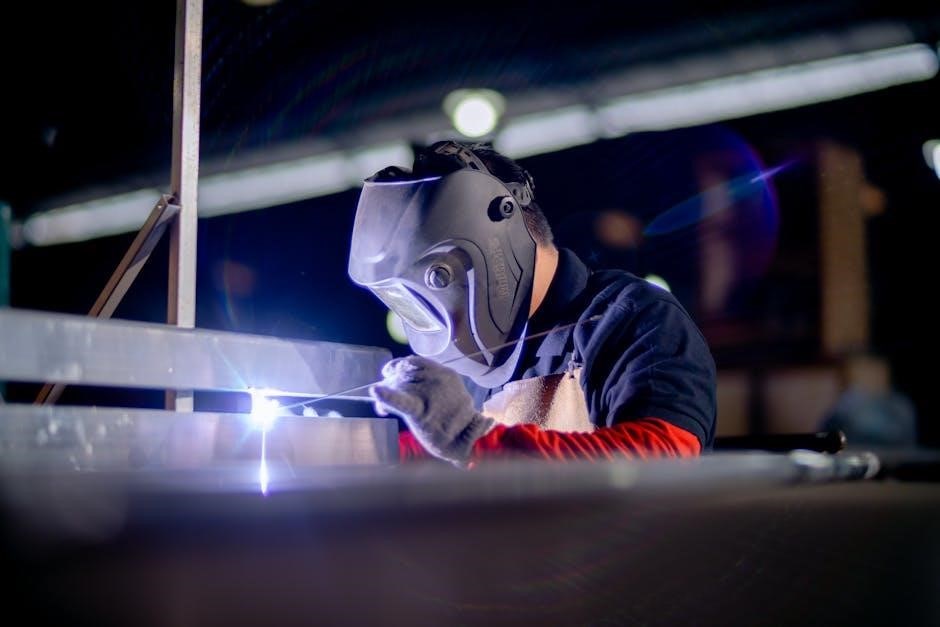
As the first U.S.A. welding equipment manufacturer registered to the ISO 9001 Quality System Standard, Miller prioritizes reliability and performance. The Dynasty 280 is built to withstand demanding environments and deliver consistent, high-quality welds.
This manual serves as a comprehensive guide to understanding and operating your Dynasty 280 effectively and safely. It covers everything from initial setup and control panel navigation to advanced welding techniques and troubleshooting.

Key features include its 208–575 Volt operation with Autoline, allowing for compatibility with various power sources. Miller’s commitment to customer satisfaction is reflected in its hassle-free warranty, ensuring peace of mind. Prior to operation, carefully review the safety information detailed within this manual.
Overview of Welding Processes Supported
The Miller Dynasty 280 excels in two primary welding processes: Gas Tungsten Arc Welding (GTAW), commonly known as TIG, and Shielded Metal Arc Welding (SMAW), or Stick welding. This dual capability makes it a versatile choice for diverse welding projects.

TIG welding, utilizing a non-consumable tungsten electrode, provides exceptional control and precision, ideal for intricate work and materials like aluminum and stainless steel. The Dynasty 280 offers advanced TIG features, including pulse control and AC balance adjustment.
SMAW welding, employing a consumable electrode, is a robust and cost-effective method suitable for thicker materials and outdoor applications. The Dynasty 280 delivers stable arc characteristics for consistent stick welds.

The machine’s 208-575 Volt input range with Autoline automatically adapts to primary voltage, simplifying setup. Whether you’re a professional fabricator or a skilled hobbyist, the Dynasty 280 provides the power and control needed to achieve superior welding results in both TIG and SMAW applications.
TIG (GTAW) Welding with the Dynasty 280
The Miller Dynasty 280 delivers exceptional performance in TIG (GTAW) welding, offering precise control over arc characteristics for high-quality welds. Its advanced circuitry ensures a stable arc, minimizing spatter and producing clean, aesthetically pleasing results.
Key features for TIG welding include adjustable AC balance, crucial for aluminum welding, and pulse welding capabilities. Pulse welding allows for focused heat input, reducing distortion and improving weld bead appearance. The machine supports both AC and DC TIG welding, accommodating a wide range of materials.
Proper tungsten selection and gas coverage are essential for successful TIG welding. The Dynasty 280’s responsive controls enable fine-tuning of parameters to optimize weld quality. Utilizing the machine’s waveform control allows customization for specific applications and materials, maximizing welding efficiency and precision.
The Dynasty 280’s TIG functionality is designed for both beginners and experienced welders, providing a versatile and reliable solution for demanding applications.
SMAW (Stick) Welding Capabilities
The Miller Dynasty 280 isn’t limited to TIG; it also excels in SMAW (Stick) welding, providing robust and reliable performance for a variety of applications. This versatility makes it a valuable asset in diverse welding environments.
The machine’s power source delivers consistent arc stability, even with challenging electrodes and materials. It handles a wide range of electrode diameters and types, allowing for flexibility in weld joint configurations. Its responsive controls enable quick adjustments to amperage, ensuring optimal penetration and weld quality.
The Dynasty 280’s SMAW capabilities are particularly beneficial for field work and maintenance repairs where portability and simplicity are paramount. The machine’s durable construction ensures it can withstand harsh conditions. Proper electrode selection and technique are crucial for achieving strong, sound welds.
The Dynasty 280 provides a user-friendly experience for stick welding, making it suitable for both novice and experienced welders alike.
Understanding the Dynasty 280 Control Panel
The Miller Dynasty 280’s control panel is designed for intuitive operation, offering precise control over welding parameters. Familiarizing yourself with its layout is essential for maximizing the machine’s capabilities.
Key elements include the digital display, which provides real-time feedback on voltage, amperage, and other settings. Dedicated buttons and knobs allow for easy adjustment of these parameters. The panel also features function buttons for selecting welding processes (TIG or Stick) and accessing advanced features like pulse welding.
Separate controls manage AC balance, pulse frequency, and waveform customization, enabling fine-tuning for specific materials and applications. Indicator lights signal machine status, such as power on, overheat protection, and gas flow.
A thorough understanding of each control allows welders to consistently achieve high-quality welds and troubleshoot potential issues efficiently. Refer to the manual’s diagrams for detailed identification of each control and its function.
Detailed Explanation of Voltage and Amperage Settings
Voltage and amperage are the fundamental controls in arc welding, directly influencing arc length, weld bead profile, and penetration. The Dynasty 280 allows precise adjustment of both parameters.
Amperage dictates the welding current, determining the amount of heat input and the melting rate of the electrode and base metal. Higher amperage is generally used for thicker materials and larger weld beads. Conversely, lower amperage is suitable for thinner materials.
Voltage controls the arc length, influencing the width and shape of the weld bead. Increasing voltage typically results in a wider, flatter bead, while decreasing voltage creates a narrower, more focused bead.
Properly balancing voltage and amperage is crucial for achieving optimal weld quality. The ideal settings depend on the material type, thickness, welding process, and desired weld characteristics. Experimentation and reference charts are recommended.
Pulse Welding Features and Adjustments
The Miller Dynasty 280 offers advanced pulse welding capabilities, providing superior control over heat input and weld bead appearance. Pulse welding alternates between a high peak current and a low background current.
Peak Current determines the intensity of the arc during the pulse, influencing penetration and melting rate. Background Current maintains the arc but with reduced heat input, allowing the weld pool to solidify slightly between pulses.
Pulse Frequency controls the number of pulses per second, affecting the weld bead’s ripple and overall heat input. Higher frequencies create a tighter ripple, while lower frequencies produce a wider ripple.
Pulse Duty Cycle adjusts the percentage of time spent at peak current, further refining heat control. Fine-tuning these parameters allows for precise welding of various materials and thicknesses, minimizing distortion and improving weld quality.
AC Balance Control for Aluminum Welding
When welding aluminum with the Miller Dynasty 280, AC Balance control is a critical function for optimizing weld quality. This feature adjusts the ratio of time spent in the positive and negative portions of the AC waveform.
A higher AC Balance (more positive time) increases cleaning action, removing the aluminum oxide layer that forms on the surface. However, excessive positive balance can lead to increased heat input and potential burn-through.
A lower AC Balance (more negative time) enhances penetration and weld puddle control. It’s ideal for thicker aluminum sections but may require more frequent cleaning.
The Dynasty 280’s AC Balance control allows precise adjustment to achieve the optimal balance between cleaning and penetration, resulting in clean, strong, and aesthetically pleasing aluminum welds. Experimentation is key to finding the ideal setting for specific alloy and thickness combinations.
Waveform Control and Customization
The Miller Dynasty 280 offers advanced waveform control, allowing welders to tailor the welding arc to specific applications and materials. This customization goes beyond simple amperage and voltage adjustments, providing granular control over the arc characteristics.
Waveform shaping enables adjustments to the arc’s focus, frequency, and duty cycle. These parameters influence penetration, bead profile, and overall weld quality. The Dynasty 280 allows users to create and save custom waveforms, recalling preferred settings for repeatable results.
By manipulating the waveform, welders can minimize heat input, reduce distortion, and improve weld puddle control. This is particularly beneficial when working with thin materials or heat-sensitive alloys. The ability to fine-tune the waveform unlocks the full potential of the Dynasty 280, delivering exceptional welding performance.
Setting Up the Dynasty 280 for Different Materials
Proper setup of the Miller Dynasty 280 is crucial for achieving optimal welding results with various materials. The machine’s versatility demands adjustments to parameters based on the metal being welded – steel, aluminum, or stainless steel.
Initial setup involves selecting the appropriate process (TIG or Stick) and configuring the machine for the specific material. This includes adjusting gas flow rates, electrode type, and polarity. The Dynasty 280’s digital control panel facilitates precise parameter adjustments.
For each material, specific voltage, amperage, and waveform settings are recommended. Referencing the detailed parameter charts within this manual ensures optimal weld quality and minimizes the risk of defects. Careful consideration of material thickness and joint design is also essential for successful welding.
Steel Welding Parameters
When welding steel with the Miller Dynasty 280, precise parameter control is vital for strong, clean welds. For mild steel, a typical amperage range is 70-150 amps, depending on material thickness, using a 2% Thoriated or Ceriated tungsten electrode for TIG. Voltage should be adjusted to maintain a stable arc, generally between 17-24 volts.
For Stick welding (SMAW), amperage settings vary significantly based on electrode diameter and type. E7018 electrodes, commonly used for mild steel, require approximately 80-120 amps for a 1/8” diameter rod. Polarity should be set to DCEN (Direct Current Electrode Negative).
Waveform settings on the Dynasty 280 can be optimized for steel by utilizing the ‘Arc Control’ feature, enhancing arc stability and puddle control. Proper gas shielding, typically Argon or Argon/CO2 mixtures, is crucial for preventing oxidation and ensuring weld integrity.
Aluminum Welding Parameters
Welding aluminum with the Miller Dynasty 280 requires AC TIG welding, utilizing the machine’s advanced AC balance control. A typical starting point for 1/8” (3.2mm) aluminum is 90-120 amps, with a frequency setting between 60-120 Hz to control arc width and penetration.
AC Balance is critical; a setting of 50-60% provides good cleaning action while maintaining adequate penetration. Use a pointed Tungsten electrode, ideally Ceriated, and Argon as the shielding gas at 15-20 CFH. Preheating the aluminum, especially thicker sections, to around 200-250°F (93-121°C) can improve weld quality.
The Dynasty 280’s waveform control allows for fine-tuning the AC waveform, optimizing for either cleaning or penetration. Avoid excessive heat input to prevent burn-through and distortion. Post-weld cooling is also important to minimize stress cracking.
Stainless Steel Welding Parameters
Welding stainless steel with the Miller Dynasty 280 typically employs the GTAW (TIG) process, utilizing a DCEN (Direct Current Electrode Negative) polarity. For 1/8” (3.2mm) 304 stainless steel, a starting amperage of 70-90 amps is recommended, with a tungsten electrode diameter of 0.040” (1.0mm).
Argon is the preferred shielding gas, flowing at 15-20 CFH, ensuring adequate protection from atmospheric contamination. Maintaining a short arc length is crucial for precise control and minimizing heat input. A slightly rounded tungsten tip is often preferred for stainless steel.
The Dynasty 280’s pulse welding features can be beneficial for controlling heat input and achieving a refined bead profile. Preheating thicker sections to 200-300°F (93-149°C) can help prevent cracking. Post-weld cleaning with a stainless steel brush is essential to restore corrosion resistance.
Troubleshooting Common Welding Issues
When encountering issues with the Miller Dynasty 280, systematic troubleshooting is key. Arc instability can stem from insufficient shielding gas, a contaminated tungsten, or improper grounding. Ensure gas flow is adequate and the tungsten is clean and correctly sharpened.
Tungsten contamination, often indicated by a wandering arc, requires replacing or re-sharpening the tungsten. Porosity in welds frequently arises from inadequate shielding gas coverage, moisture contamination, or improper travel speed.
Verify gas lens cleanliness and material surface preparation. If experiencing erratic behavior, check the work clamp connection and power cable integrity. Always consult the manual’s safety section before performing any maintenance. Remember to disconnect power before inspecting internal components.
Addressing Arc Instability
Arc instability during welding with the Miller Dynasty 280 often presents as a wandering, sputtering, or extinguishing arc. A primary cause is insufficient shielding gas; verify proper gas flow rate and check for leaks in the gas line and nozzle.
Contamination of the tungsten electrode is another frequent culprit. Ensure the tungsten is clean, correctly sharpened, and free from oxides. Improper grounding can also induce instability – confirm a solid connection between the workpiece and the ground clamp.
Fluctuating power supply voltage can contribute to arc issues. The Dynasty 280’s Autoline feature helps, but extreme voltage variations may still occur. Adjusting arc force or contactor settings might improve stability. If problems persist, inspect the welding cable for damage or loose connections.
Resolving Tungsten Contamination
Tungsten contamination is a common issue when TIG welding with the Miller Dynasty 280, manifesting as inclusions in the weld or a generally erratic arc. The primary cause is dipping the tungsten into the weld pool, immediately halting the process to prevent further contamination.
If contamination occurs, stop welding and clean the tungsten. For minor contamination, a brief re-sharpening may suffice. More severe contamination necessitates grinding the tungsten to expose a fresh, clean surface. Always grind away from the tip to avoid embedding contaminants.
Proper technique is crucial for prevention. Maintain a consistent arc length and avoid touching the tungsten to the workpiece. Using the correct amperage and gas coverage also minimizes contamination risk. Regularly inspect the tungsten during welding and replace it when necessary.
Dealing with Porosity in Welds
Porosity, characterized by small holes within the weld, can occur during welding with the Miller Dynasty 280. Common causes include insufficient shielding gas coverage, moisture contamination, or dirty base metal. Addressing these issues is vital for weld integrity.
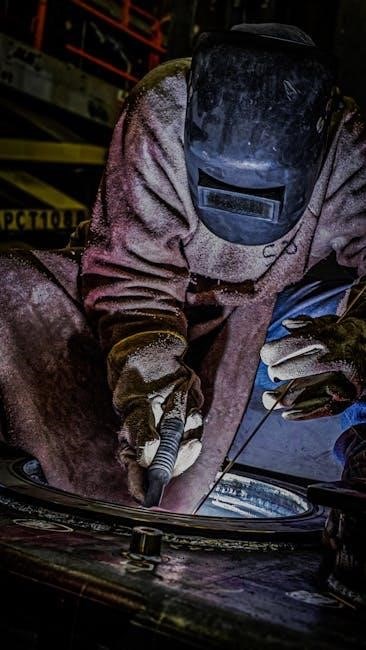
Ensure adequate gas flow and check for drafts that might disrupt the shielding gas envelope. Thoroughly clean the base metal, removing any rust, mill scale, oil, or paint. Properly stored and dried electrodes are essential, especially when SMAW welding, to prevent moisture-induced porosity.
Adjust welding parameters like travel speed and amperage. A slower travel speed allows for better gas coverage. If porosity persists, inspect the gas lines for leaks and verify the correct gas type is being used. Consider preheating the base metal to drive off moisture in thicker sections.
Maintenance and Care of the Dynasty 280
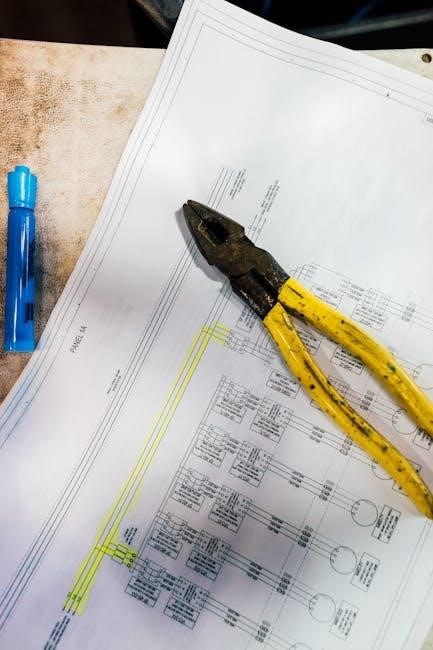
Regular maintenance is crucial for the longevity and optimal performance of your Miller Dynasty 280. Consistent cleaning and inspection procedures are paramount. Periodically inspect all cables, connections, and hoses for damage or wear, replacing them as needed.
Dust and debris should be removed from the machine’s exterior and interior using compressed air. Pay close attention to the cooling system, ensuring the fan and air vents are unobstructed. Check the coolant level and condition regularly, replenishing or flushing as recommended in the manual.
Inspect the gas lines for leaks and ensure proper gas flow. Adhere to the recommended maintenance schedule outlined in the owner’s manual for optimal results. Proper care extends the lifespan of your investment and ensures reliable welding performance.
Cleaning and Inspection Procedures
Routine cleaning and thorough inspections are vital for maintaining the Miller Dynasty 280’s performance and reliability. Begin by disconnecting the power source before any inspection or cleaning. Visually inspect all cables, hoses, and connections for cracks, fraying, or loose fittings, replacing damaged components immediately.
Use compressed air to remove dust, dirt, and metal debris from the machine’s exterior and interior, focusing on ventilation areas. Inspect the welding leads and ground clamp for corrosion or damage. Check the tungsten electrode for wear or contamination after each use.
Regularly examine the gas lines and fittings for leaks, ensuring a secure connection. A clean machine operates more efficiently and reduces the risk of malfunctions. Document all inspections and maintenance performed for future reference, ensuring a proactive approach to upkeep.
Cooling System Maintenance
The Miller Dynasty 280’s cooling system is crucial for sustained, high-performance welding, particularly during extended TIG operations. Regularly inspect the coolant level in the reservoir, ensuring it’s filled with the manufacturer-recommended coolant mixture – typically a 50/50 blend of distilled water and ethylene glycol.
Check the radiator and fan for obstructions like dust or debris, cleaning them as needed to maintain optimal airflow. Inspect the coolant hoses for cracks, leaks, or kinks, replacing any damaged hoses promptly. Monitor the coolant temperature during operation; overheating indicates a potential issue.
Flush the cooling system annually to remove sediment and maintain efficient heat transfer. Proper coolant maintenance prevents overheating, extending the lifespan of critical components and ensuring consistent welding performance. Always allow the system to cool completely before draining or refilling.
Understanding Safety Symbols and Warnings
The Miller Dynasty 280 manual utilizes specific symbols to highlight potential hazards and safety precautions. Recognizing these symbols is paramount for safe operation. Symbols indicate risks of electric shock, burns, fumes, and fire, among others.
Pay close attention to warnings regarding arc welding hazards, including the intense UV radiation emitted during welding, which can cause eye and skin damage. Always wear appropriate personal protective equipment (PPE), such as a welding helmet with the correct shade lens, gloves, and protective clothing.
The manual also details additional symbols related to installation, operation, and maintenance. Familiarize yourself with these symbols before using the machine. Adhering to these safety guidelines minimizes the risk of injury and ensures a safe working environment. Ignoring warnings can lead to serious consequences.
Arc Welding Hazards and Precautions
Arc welding with the Miller Dynasty 280 presents inherent hazards requiring strict adherence to safety precautions. Electric shock is a significant risk; always ensure proper grounding and insulation of equipment and workpieces. Avoid welding in damp environments or while wearing wet clothing.
The intense arc produces harmful ultraviolet (UV) and infrared (IR) radiation, causing burns to the skin and eyes. Always wear a properly shaded welding helmet and protective clothing. Fumes and gases generated during welding can be hazardous to your health; ensure adequate ventilation or use respiratory protection.
Fire and explosion risks are present due to sparks and hot metal. Remove flammable materials from the welding area and have fire extinguishing equipment readily available. Be aware of potential hazards from compressed gas cylinders and electrical cables. Prioritize safety to prevent accidents and injuries.
EMF Information and Mitigation
Electromagnetic Fields (EMF) are present during arc welding with the Miller Dynasty 280. While the health effects of EMF are still debated, it’s prudent to minimize exposure. EMF levels are influenced by the welding current, distance to the arc, and surrounding environment.
Mitigation strategies include keeping welding cables close together, routing them close to the workpiece, and minimizing the length of welding cables. Avoid coiling excess cable length as this increases EMF radiation. Maintain a safe working distance from the welding arc and power source.
Individuals with pacemakers or other implanted medical devices should consult their physician before operating or working near arc welding equipment. Regularly inspect welding cables for damage and ensure proper connections. Following these guidelines helps reduce potential EMF exposure.
California Proposition 65 Warnings
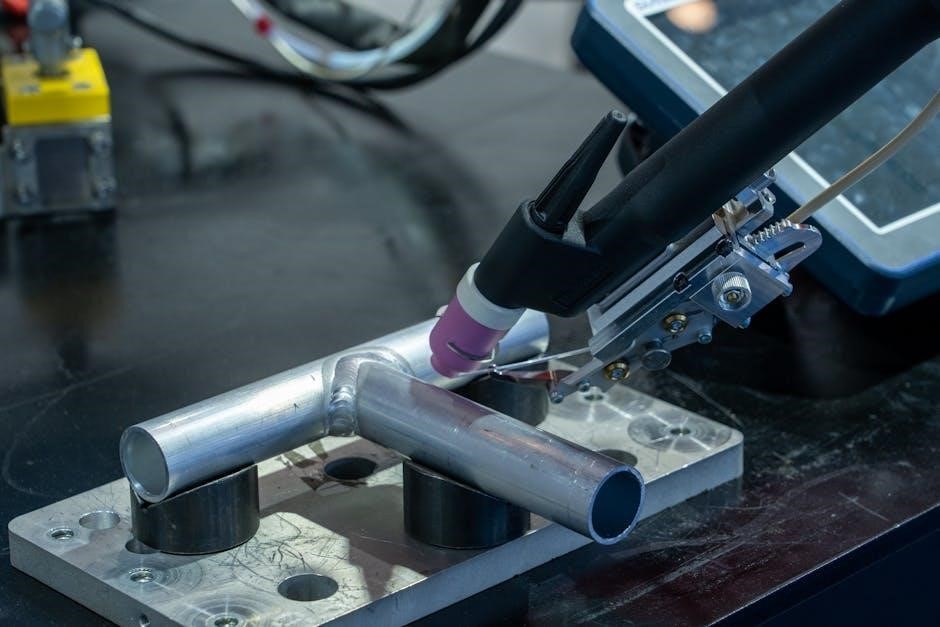
California’s Proposition 65 requires a warning regarding potential exposure to chemicals known to the state to cause cancer and reproductive harm. Welding processes, including those utilizing the Miller Dynasty 280, can generate fumes and particles containing such substances.
These chemicals can be found in the materials being welded, the welding consumables (rods, wire, tungsten), and the fumes produced during the welding process. Exposure can occur through inhalation and skin contact. It’s crucial to implement proper safety measures.
Always ensure adequate ventilation, wear appropriate respiratory protection, and use protective clothing to minimize exposure. Wash hands thoroughly after welding and avoid breathing fumes. For more information, refer to the official California Proposition 65 website or consult with safety professionals.
Warranty Information and Support
Miller Electric Manufacturing Company stands behind its products, including the Dynasty 280, with a comprehensive warranty designed for peace of mind. This warranty covers defects in materials and workmanship under normal use and service, ensuring a reliable welding experience.
The specific terms and duration of the warranty can vary, so it’s essential to consult the official warranty statement included with your machine. Registration of your Dynasty 280 is highly recommended to expedite any warranty claims and receive important product updates.
For warranty claims, technical support, or to locate authorized service centers, visit the MillerWelds website (www.MillerWelds.com) or contact their customer service department. Miller is committed to providing exceptional support and ensuring customer satisfaction with their welding equipment.